

Super Projects Drive Technological Iteration: Prestressed Steel Strand Industry Steps into a New Era of High Strength and Green Development
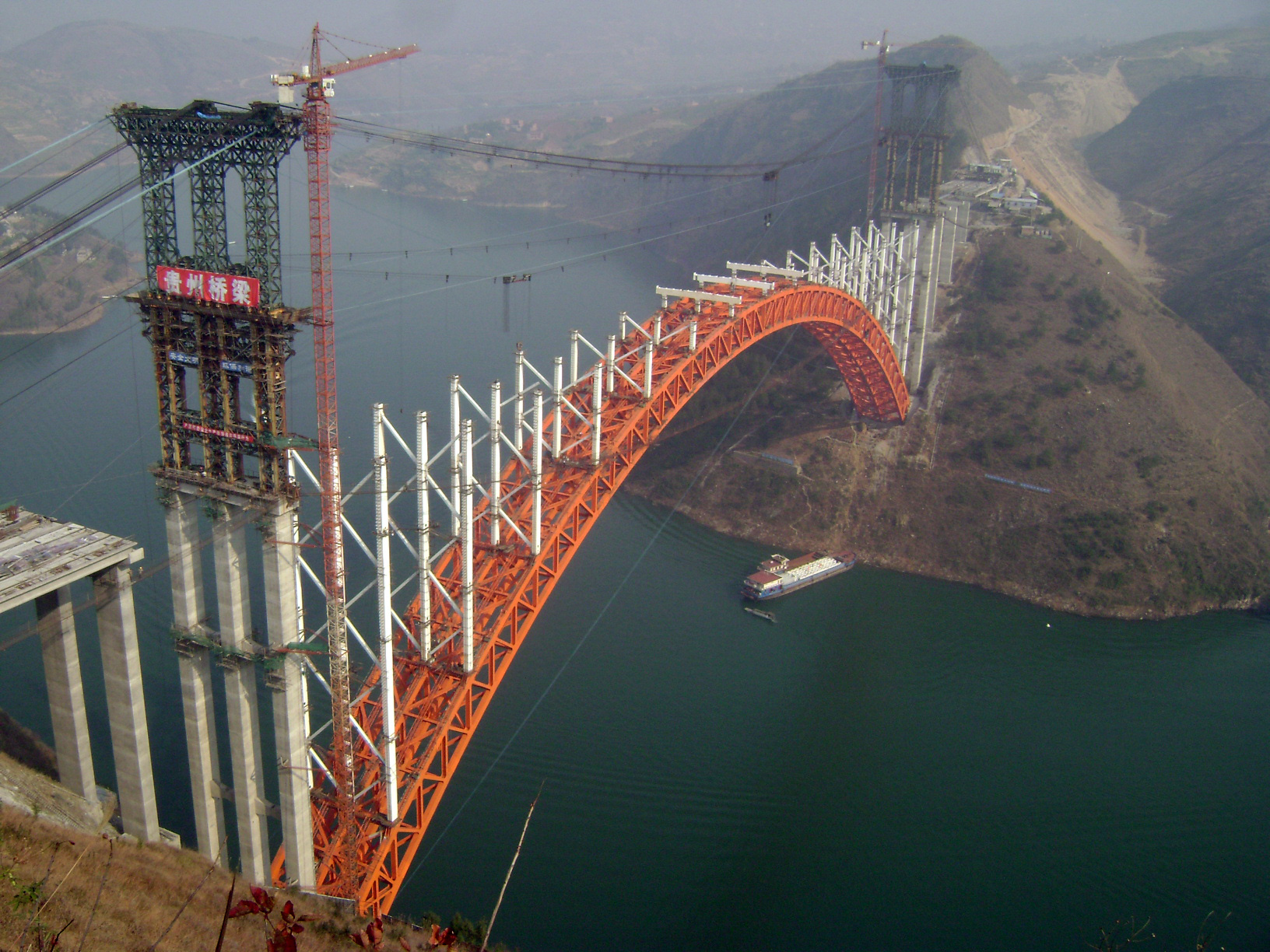
Since 2025, driven by national key projects such as the Yarlung Zangbo River Super Hydropower Station and the Xiong'an-Shangqiu High-Speed Railway, China's prestressed steel strand industry has ushered in dual opportunities of product structure upgrading and market demand expansion. Data shows that the industry's market scale is expected to exceed 58 billion yuan in 2025 and climb to 80 billion yuan by 2030, with a compound annual growth rate (CAGR) maintaining a high level of 8.5%. High strength, corrosion resistance, intelligence, and low carbonization have become the core development directions.
Major Projects Activate High-End Demand, Large-Scale Application of Ultra-High Strength Products
The full-scale construction of the world's largest hydropower project in the lower reaches of the Yarlung Zangbo River (with a total investment of 1.2 trillion yuan and an installed capacity of 60GW) has become a "touchstone" for the industry's high-end transformation. The project needs to pass through 17 geological fault zones and areas with 9-degree high seismic intensity, putting forward extreme environmental adaptation requirements for prestressed steel strands. Ultra-high strength steel strands of 2200-2400MPa have been applied on a large scale, with strength increased by more than 40% compared with traditional products, capable of withstanding millions of cycles of load and 8.5-magnitude earthquakes. It is estimated that the project alone requires more than 100,000 tons of steel strands, mainly used in core links such as the support of 50-kilometer extra-long water diversion tunnels, the anchoring of flexible dams, and the reinforcement of high-pressure water transmission pipelines. Among them, intelligent steel strands embedded with fiber Bragg grating sensors realize real-time monitoring of stress and strain with an accuracy of over 90%, providing dynamic guarantee for project safety.
In the field of transportation infrastructure, high-speed railway projects such as Xiong'an-Shangqiu, Xiong'an-Xinzhou, and Xi'an-Chongqing have also accelerated the replacement process of ultra-high strength steel strands. The proportion of products above 1860MPa has reached 60%, and 2200MPa products have been successfully extended to 250km/h lines, which not only reduces the amount of engineering materials but also improves structural durability. Data from the Prestressed Branch of the Chinese Society for Metals shows that the current market share of high-performance steel strands (low relaxation, corrosion resistance, ultra-high strength) has reached 35%, and is expected to increase to more than 65% by 2030.
Cost Pressure and Policy Drive: Green Transformation Becomes a Key Competitiveness
The industry's development is also facing dual challenges of fluctuating raw material prices and tightening environmental policies. As the core raw material, high-carbon steel wire rod has experienced a price fluctuation range of 15%-20% since 2023 due to the impact of bulk commodities such as iron ore and coking coal. Coupled with the proportion of environmental compliance expenditure rising from less than 3% in 2020 to 6.5% in 2024 under the "dual carbon" goal, the average production cost per ton of steel has increased by 18% compared with 2020. To cope with cost pressure, leading enterprises such as Tianjin Yinlong and Kaifeng Hengtong have established long-term agreement procurement mechanisms with upstream steel mills, implemented a "base price + floating" pricing model, and accelerated process upgrading.
Low-carbon transformation has become the core competitiveness of enterprises. Shougang Group has reduced the carbon emission intensity of high-carbon steel products by 9% through low-carbon steelmaking technology, and its steel strands exported to Europe can obtain a 3.5% green premium, with a gross profit margin 4 percentage points higher than the industry average. Newly built steel strand projects in the Yangtze River Delta have been forced to be equipped with carbon capture devices, and the Yangtze Economic Belt is forming the world's largest low-carbon steel strand industrial cluster. At the policy level, the "Implementation Plan for the High-Quality Development of the Green Building Materials Industry" clearly promotes the technological upgrading of prestressed materials. Key regions such as Beijing-Tianjin-Hebei require the completion of ultra-low emission transformation by 2025, which is expected to promote the withdrawal or transfer of 30% of small and medium-sized production capacity to the central and western regions.
Standard Improvement and Overseas Expansion: Continuous Optimization of Industrial Pattern
The domestic technical standard system is constantly improving. The National Technical Committee of Standardization for Steel (SAC/TC183) has recently completed the preliminary review of several national standards such as GB/T 25823 and GB/T 33363, further standardizing the technical indicators and inspection requirements of special steel strands such as epoxy-coated and hot-dip galvanized steel strands to meet the needs of high-end projects such as bridges and cables. The international discourse power has also been improved simultaneously. The revision of ISO 14655 "Epoxy-Coated Prestressed Steel Strands for Prestressed Concrete" led by Liuzhou OVM has been approved and established, laying the foundation for Chinese products to enter the international market.
Overseas markets have become a new growth pole. The RCEP agreement has reduced tariff barriers in Southeast Asia, and the export volume of domestic steel strands to ASEAN increased by 45% year-on-year in 2023. Hengxing Technology plans to invest in the construction of a 150,000-ton high-performance steel strand project in Vietnam, and a foreign-funded steel strand project in Haikou (with an annual capacity of 200,000 tons) has been put into operation, focusing on radiating the Southeast Asian market to avoid trade barriers. Domestically, the industrial concentration continues to improve. The industry's CR10 has risen from 41% in 2020 to 58% in 2023. Merger and reorganization, as well as intelligent transformation, are accelerating. It is expected that by 2027, intelligent temperature-controlled rolling production lines will account for 40% of the total capacity.
Industry experts said that with the in-depth integration of new infrastructure, urban renewal, and the "dual carbon" strategy, the demand for prestressed steel strands in new scenarios such as wind power towers, LNG storage tanks, and UHV power grids will continue to be released. Enterprises need to focus on the R&D of high-strength materials, low-carbon process transformation, and the integration of intelligent monitoring technology to seize opportunities in the new round of industrial upgrading.